DDan: Ahoy explorer, welcome along to the smartest speed run through the solar system. Let's discover everything lurking inside. It's a brand new science quest. My name is Dan. Every week we sort out your questions, we learn about deadly beasts and we chat to the smartest scientists around.
DDan: This week, we're asking what gives fish the ultimate superpower to breathe beneath the waves?
HDr Helen Scales: Well, I mean, yeah, gills are basically like a fish's version of our lungs, except they work in water instead of air. And I have to say, I think I'm going to say right out the gate, actually. I wish I had gills.
HDr Helen Scales: I wish I had gills instead of lungs so that I could actually go and explore underwater.
DDan: Also, you can learn about one of the rarest rodents around. And stepping into the brain box is an anthropologist who's decoding what actually makes us human.
JDr Jess French: I spent an absolutely amazing summer in a Thai rainforest where I would get up in the morning to the sound of gibbons and the rainforest waking up around me. And I would go to the night tree, which is where the gibbons had been asleep the night before.
JDr Jess French: And I would follow them for the whole day just to see what they did.
DDan: It's all on the way in a brand new science quest. Let's start off with your science in the news then. And SpaceX's Starship rockets splashed down in the Pacific Ocean this week seven hours earlier than planned. During the mission, the ship sent out 26 Starlink satellites.
DDan: They will meet up with the ones that are already out there. It helps send broadband internet across the Earth. But after 90 minutes, SpaceX announced that it was ending early. No one really knows why. And then it landed after about three hours of orbital flight.
DDan: Well, it landed, it crashed down in the ocean. It ended in a fireball, with a large part of the rocket being inflamed before it flopped into the sea. It's very strange. It's a bit of a mystery as to why this has happened.
DDan: But it's more attempts by humans to get into space, putting satellites across the solar system, which should spread internet to some of the more remote parts of the world. And well, SpaceX, we know that they will try again.
DDan: Also, this week, NASA scientists have been studying rocks in the Scottish highlands to help them understand if there was once life on Mars. This is a brilliant story because this summer scientists took samples from a geological feature. It's called the Stoa Formation in northwest Scotland.
DDan: They are huge clumps of rocks where you can see the layers of different types of rock that have been lent there over millions and millions of years, really. It's in northwest Scotland. Scientists have been doing this because NASA has said that it's similar to the environment around ancient lakes and rivers on Mars.
DDan: You see, NASA has found evidence of potential past life on Mars, so they want to study the rocks from Scotland where they know there has been ancient life to see what they can learn about the stuff on the red planet.
DDan: It's brilliant. It's kind of thinking outside of the box, isn't it? You don't really expect a mission to discover if there is life on Mars to take experts to the wilder corners of Scotland. But it's brilliant that experts are thinking what they can learn and where they can find it.
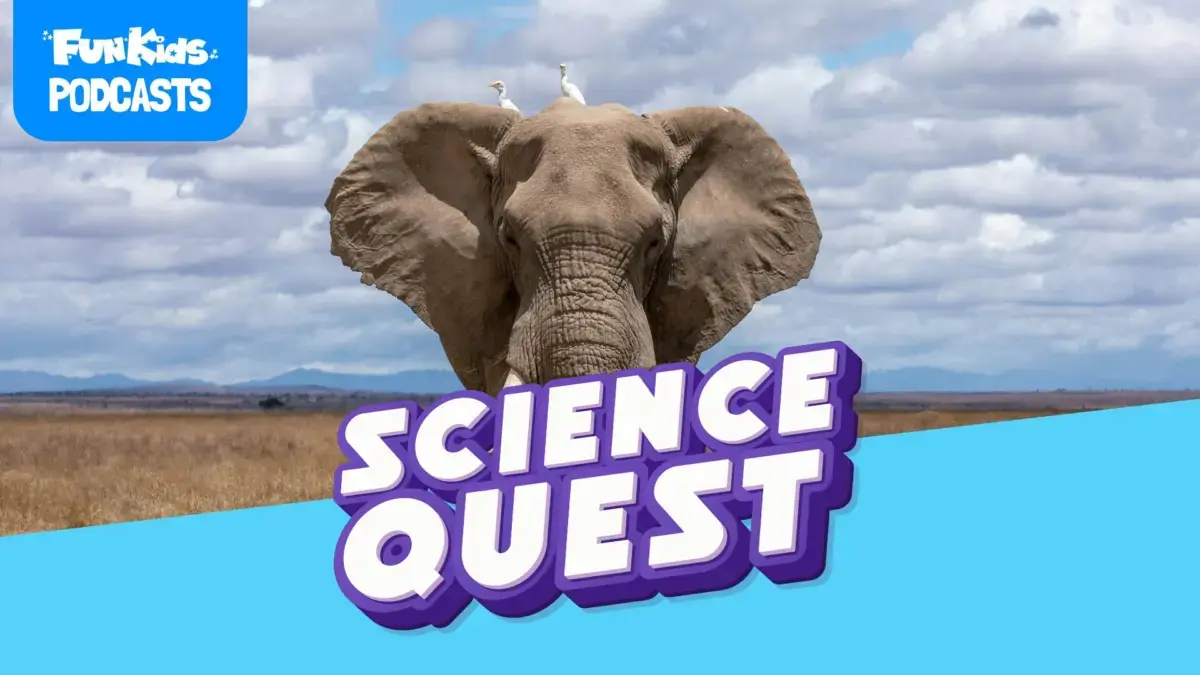
DDan: And our final story this week, African elephants are using natural wildlife nearby to treat themselves and their families when they're sick. That's what experts have discovered. They've been looking at these elephants in Kenya recently and they've discovered that they use medicinal plants to treat themselves.
DDan: Shall we find out? One of the lead researchers on this is Dr. Elodie Freymann from Brown University who joins us. Elodie, thank you so much for being there. So what have we discovered about elephants and their behavior and maybe what might make them seek out these plants?
EDr Elodie Freymann: Well, for one, we learned that it appears that they have a lot more medicinal plants in their diet than we previously thought. And a lot of these medicinal plants that seem to be in their diet that they seem to seek out in some cases when they're showing symptoms and signs of illness are actually really important medicines for people in the local community as well, which shows that, you know, here in this region in Mount Elgon in Kenya, it actually appears that animals and elephants and people are sharing their medicine cabinet.
EDr Elodie Freymann: And that's really, really important for conservation.
DDan: What do we know about how elephants are passing this information down through their generations, for instance? Is it all trial and error? Is a parent elephant showing their child elephant that this plant might help you if you're feeling like this?
EDr Elodie Freymann: That's a huge gap in the field. So that's still a really key piece of information. That we don't know. And that's not just true for elephants. It's a gap across all of these animals that appear to be self-medicating.
EDr Elodie Freymann: We're still trying to figure out how they're acquiring that information. And I think if I had to give you my best guess, it's a little bit of nature and it's a little bit of nurture. So there's probably some instinctual aspect where, you know, elephants and other animals are drawn to certain tastes or textures.
EDr Elodie Freymann: And then there's some aspect of social learning. So learning from other individuals in the group or in the community. And if you think about how we learn new medicines, or we learn what to take when we're sick or injured, it's a little bit the same.
EDr Elodie Freymann: You know, if you're not feeling well, you might be drawn to have something that makes you feel better, like a warm soup. But what kind of soup is probably determined by, you know, what your grandmother gave you when you were feeling ill as a kid.
EDr Elodie Freymann: So a little bit of instinct, a little bit of learning, but something that we're still deeply interested in and trying to study more.
DDan: What do we know about whether elephants have different plants for different illnesses, perhaps?
EDr Elodie Freymann: Great question. That's something that, you know, in these accounts that when we were talking with local experts, seemed to come up a lot. That the experts we were talking to did say in quite a few cases that elephants, when they were sick with, you know, X illness, sought out Y plant.
EDr Elodie Freymann: And so it does seem from these first-hand observations that elephants, when they have certain types of problems, like a digestive problem or they're feeling lethargic, they don't have a lot of energy, they'll go to specific remedies in their environment.
EDr Elodie Freymann: And that's something that we now have to follow up on. We have to start kind of linking these behaviors with these specific plants and is kind of one of the next stages of the research that we're going to be doing.
DDan: And with habitat loss and deforestation, that adds another worry into our mix because now perhaps elephants might not just lose where they live, but also lose really vital medicines that are keeping them healthy.
EDr Elodie Freymann: Yeah, and this is something that I care deeply, deeply about and that our team cares deeply about. You know, now that we're realizing just how complex and diverse the medicinal repertoires are for elephants, just how many medicinal plants they seem to be relying on.
EDr Elodie Freymann: And our study was just one region. Think about the elephants all over the world. We realize that if we want to keep elephant populations healthy and flourishing in the future, it's not enough to just give them space and leave their food intact.
EDr Elodie Freymann: We need to also make sure that they have access to the medicines they need to stay healthy.
DDan: Let's get to your questions then. If you ever have something sciencey that you want answered, anything at all, make sure you send it as a voice note to me. You could do it on the FreeFunKids app, funkidslife.com too.
DDan: I will get the question. You can star in the show. We will find a genius that will sort it out for you, someone who specializes in that exact science. I love it when they come on. We just need more questions for them.
DDan: So if you've got something science-y, whatever it is, even if it's something that you've heard on the show, which you think I want to know more about that, well, let us dive deeper. Just send it as a voice note to the FreeFunKids app and at funkidslive.com too.
DDan: Here's a question. It's a message from Ben who wants to know: why does your stomach rumble? Well, that noise is because of something called borbarigamy. And that's the movement of gases and fluids and chemicals through your stomach and your intestine when it's empty.
DDan: You see, when you're hungry, your brain is talking to your stomach. Maybe you've smelled a delicious food, a freshly cooked pizza, or bread baking. Well, you smell that and your brain thinks it's about to eat. So it sends hormones, it sends chemicals to your stomach, telling it to get ready, to expand, to get all the juices ready and prepared to break up the food so it can get the nutrients and vitamins to keep you healthy.
DDan: The grumbling you hear is the movement of your organs, really, your stomach and your intestines. And they're kind of moving a lot, but because your stomach is empty, the sound is echoing around it a lot more. Like you making a noise in a cave.
DDan: You can hear everything because there's nothing in it to block the way. If there were food in your stomach, well, that would muffle the noise. Also, after around two hours from when your stomach has emptied, your brain sends signals to trigger a sweeping movement of strong muscular contractions.
DDan: It kind of squeezes your stomach and your intestine, which gets rid of anything else that might be left over. And those waves, those contractions, they squeeze air and gastric juices through your empty stomach, which makes that growling sound.
DDan: It makes it really loud. And that is why your stomach is rumbling. It's doing it quite a lot. It's just that you can hear it when there's nothing inside it. And if there's nothing inside, You are probably hungry, so you think that when your stomach is rumbling, you're hungry.
DDan: I hope that makes sense, Ben. Thank you very much for your question. Let's get on another one, shall we? Here's a voice note. It's been sent in from Henry.
HHenry: Hi, I'm Henry. I am seven years old. And what I would like to know is how do gills help underwater creatures breathe.
DDan: Henry, thank you so much for your question. Why do gills help fish to breathe? Well, helps them breathe. It's what makes them breathe. So let's figure it out, shall we? Helping us with the answer, Dr. Helen Scales, who is a marine biologist, a doctor of fish.
DDan: Helen, thank you so much for joining us. What do gills do that make fish breathe?
HDr Helen Scales: Well, I mean, yeah, gills are basically like a fish's version of our lungs, except they work in water instead of air. And I have to say, I think I'm going to say right out the gate actually. I wish I had gills.
HDr Helen Scales: I wish I had gills instead of lungs so that I could actually go and explore underwater and do the same thing. But it's a really, really bad idea to do that when you only have lungs because our lungs don't work when they are wet.
HDr Helen Scales: But fish have gills that work brilliantly in water. But we're doing essentially the same thing. They are, they're getting oxygen so that their bodies can work, just like our bodies need oxygen and we get that oxygen from the air.
HDr Helen Scales: And our lungs are very good at removing that oxygen. And likewise, that's what happens in fish. Only they can do it underwater, which is, as I say, I'm very jealous.
DDan: We take a big breath of air. It then fills those little sacks that are in our lungs. The oxygen leaps to our bloodstream. When a fish is underwater and everything's moving past it, what's the gill doing?
HDr Helen Scales: Right, so it is a bit different. For one thing, what they do is they open their mouths and they let the water go in. So just like us, I guess we open our mouths and we inhale. And that water flows through the back of their throats.
HDr Helen Scales: And that's where the gills are. And they have gills on either side of their throats, usually in pairs. So it depends on the fish. Sharks, which I very much consider as a type of fish, have between five and seven pairs of gills on each side.
HDr Helen Scales: Other fish generally have about five. And they're basically these feathery things, these feathery structures that are full of blood. And that's the important thing because it's the blood that picks up the oxygen from the water and it diffuses, it moves from the water into the blood across these feathery, feathery things in the backs of their throats, which are the gills.
HDr Helen Scales: And the feathers are really important because that means there's a lot of area for that oxygen to move. Like we've got all these little grape-like things in our lungs and those make a huge, huge area for us to absorb oxygen.
HDr Helen Scales: And in the fish, it's these sort of feathery, these feathery things in their gills, which do essentially the same thing. But as I say, they work wet instead of with dry air like our lungs do. And then I guess another different thing that happens in fish compared to us is what we do is we breathe the air into our lungs and then we breathe it out again in the same way, but in the other direction.
HDr Helen Scales: And what happens in a fish is that the water keeps on going. It flows out of their gills. They've got a gap at the back. They've got a hole, if you like, in the side of their body. And so really the water's flowing right through them over their gills, picking up that oxygen, which goes into their body.
HDr Helen Scales: And then the water just flows on behind them. So they don't push that water generally. They don't push it back out again like we do. It kind of just flows through them.
DDan: Well, there you go, Henry. That's how gills help fish to breathe. Dr. Helen Scales, thank you so much for joining us.
HDr Helen Scales: It's been a pleasure. Thanks for having me.
DDan: Let's get into this week's Dangerous Dan, where we try and search out some of the most mean or weird and strange and unique things around the world. This time we're headed to South America to try and find one of their most elusive creatures, the Pacarana.
DDan: The Pacarana is a rodent. It looks like an oversized portly guinea pig. They are slow-moving, chunky. You'll find them in forests and river valleys on the edge of the Andes mountains. So we're talking Venezuela and Colombia and Bolivia.
DDan: They're the last surviving member of the ancient family Dinomidae. This is a branch of evolution which once had rodents the size of rhinos in there. But today, only this mysterious pacarana remains. It grows to over two foot. It weighs 15 kilograms.
DDan: So it's big. It's got brownish grey fur with small ears, beady eyes. It's got a thick furry tail too. And it acts a bit like a bear. When it eats fruits and leaves, it sits upright. Like you might sit on the floor if you're eating some food.
DDan: It munches like we do. Clips of them go viral all the time online. When they're standing up, because they kind of scrub themselves to be clean, a bit like a human in a shower. It looks very strange, kind of half human, but also a rodent.
DDan: And to talk to its friends through the dense mountain fog, it uses a language of foot stomping and teeth chattering and whining sounds. It's got four massive curved claws on each foot, and it uses these not to be deadly at all, really.
DDan: They are huge, but it uses them to climb trees, to dig burrows, and to open tough plants. They spend daylight hiding deep inside rocks and caves, sometimes burrowing under trees before they come out at night. And well, to get a new pacarane, it takes ages, nine months for a female to make a new one.
DDan: So there aren't that many around. They're rare and they're vulnerable. They're not really deadly, but they're just awesome. So because they're so big, they're unique and brilliant. We're going to find a place for them on our Dangerous Dan list.
DDan: It's time to open up the brain box then and invite an expert to step on in if they're brave enough and explain what has really inspired them.
BBrain Box: Launch sequence initiated. Initiating identity scan. Preparing discovery mode. Brain box ready. Please enter. Welcome to the Science Quest Brain Box. State your name and job title.
JDr Jess French: Hi, my name's Dr. Jess French. I am a zoologist, and that means I basically spend my time learning and finding more out about animals and the natural world. I find out about the way they live, the way their bodies work, the way they interact with the world around them.
JDr Jess French: This is everything from elephants or the huge cetaceans that live in the sea to the tiniest, tiniest forms of life that might be even one cell big.
BBrain Box: Travel back to the beginning. When did science first capture your imagination?
JDr Jess French: I remember I once found an acorn that looked vastly different to all of the acorns that I'd ever seen before. It had this sort of warty, knobbly mass on the top of it. And I found that really peculiar.
JDr Jess French: And I asked the people I was with, my parents and some other children, and nobody had any idea why this acorn looked the way it did. So I went home and did some research in my nature books. And I found out that this was the reaction of the acorn when a Nopogal wasp had laid an egg inside it.
JDr Jess French: And from that, I learned more widely about the interactions between wasps and plants, but even more than that, the interactions between animals and the world around them.
BBrain Box: What did you learn, study, or practice to become the scientist you are today?
JDr Jess French: So after I started to learn about these interesting things in nature, I realized every time I went out on a nature walk, I found something new that I didn't understand. And my fascination grew and grew. And I learned more and more just through books sometimes, sometimes asking the grown-ups around me.
JDr Jess French: But it wasn't enough eventually just to read books. I needed to go and study this at university. So I've done a couple of degrees teaching me about why these things happen the way they do. So I've done a zoology degree where I learned lots and lots about animals and the natural world.
JDr Jess French: And then I wanted to know even more about animal bodies. So I went and did a veterinary degree as well. So I'm a qualified veterinary surgeon.
BBrain Box: What is the most amazing discovery you have ever made, seen, or been part of?
JDr Jess French: I spent an absolutely amazing summer in a Thai rainforest where I would get up in the morning to the sound of gibbons and the rainforest waking up around me. And I would go to the night tree, which is where the gibbons had been asleep the night before, and I would follow them for the whole day just to see what they did, where they went, what they were doing during the day.
JDr Jess French: And it was all part of a study to find out why these creatures went where they did. Did they just randomly travel through the forest or did they have a plan? Did they go directly to the trees that had the fruit at that time?
JDr Jess French: Did they know where there might be something yummy for them to eat? Or did they just kind of meander through the forest? And we found out that these incredible gibbons knew exactly which trees would be fruiting at that time and they'd make a beeline for them, taking the most neat route to those trees.
JDr Jess French: So they were aware of where they were going. They were planning their routes through the forest and they knew what they were doing. It was brilliant.
BBrain Box: If you could go back in time, what advice would you give yourself when you were in school?
JDr Jess French: I think sometimes people thought that the type of curiosity that I had about the natural world, which sometimes would involve things that might be considered a little bit icky, like looking inside the body of an animal that had died, people might think that was a bit weird.
JDr Jess French: And I would just tell myself, stay curious. Keep sort of investigating those things other people might not find as interesting as you, because one day that can become your whole career. It could take you to the Thai rainforest.
JDr Jess French: It could take you to the stage where you're talking about these incredible creatures that you've learned about. It could take you all over the world. Your curiosity will take you so far.
BBrain Box: Final brain box question. At the end of your career, what big scientific question would you most love to see answered?
JDr Jess French: I'm really interested in animal communication, and I wonder if one day we will find out what animals are saying to each other. So we have recorded animal communications for a really, really, really long time, but it's been difficult to analyze all of that information because sometimes there's other sounds going on in the background, or sometimes it's just a huge, huge volume of data.
JDr Jess French: And as technology improves, we're going to be more able to analyze big sets of data like this and to remove the background noise. And we might just be able to work out what kind of conversations these creatures are having to one another.
JDr Jess French: And I, for one, would love to know what they're saying.
BBrain Box: Brain box complete.
JDr Jess French: Please exit.
DDan: Now, with our questions this week, we learned all about fish, didn't we? Henry asked us the question: how do fish breathe? How do gills help them? We had marine biologist Helen Scales on. And we're going to, well, be inspired by that and learn a bit more about how fish help us, really, with Professor Halleck, who's a genius.
DDan: He knows everything about your body and what really helps it work. And, well, it turns out fish can play a brilliant part in that.
AAnnouncer: Nurse Nanobots, Healthy Heart Guide, the Heart Guide.
NNurse Nanobots: Professor! I thought we had agreed that you weren't going to ride your motorbike indoors anymore.
HProfessor Hallux: I am fed up having to get tire marks off this kitchen floor. Sorry, nurse, but I do have a good reason this time. I was going to drain some oil out of the engine to have with my fish.
HProfessor Hallux: You're always on about how I should eat more healthily, so I'm going to start eating oily fish every week.
NNurse Nanobots: Great idea, Professor. But you seem to have caught the wrong end of this fishing blind. You don't need to add oil to fish. It's there already. Some fish, like tuna, mackerel, sardines, salmon, and pilchards, are naturally high in a
HProfessor Hallux: good fat called Omega-3. Omega-3? That sounds like a bad film at the cinema.
AAnnouncer: Omega-3? This time it's all getting a bit fishy.
NNurse Nanobots: Very good, Professor. But Omega-3 is actually really good for your heart. So it's a good idea to make sure you build some into your diet.
HProfessor Hallux: Righto, nurse. Let's get this bike back outside then.
AAnnouncer: Nurse Nanobots Healthy Heart Nanotip.
NNurse Nanobots: Getting active is easy. Try this for size. It's great fun having trips to the cinema, but sitting in one place for a few hours isn't going to get you hard working. Try to combine exercise into everything you do.
NNurse Nanobots: If you're off to the cinema, see if you can walk or cycle there instead of being driven in a car. That will really get your pulse racing. Getting at least an hour of exercise every day and eating well will keep your heart healthy.
AAnnouncer: Nurse Nanobots Healthy Heart Guide, funded thanks to a Heart Research UK Healthy Heart Grant. Find out more and get hands-on at funkidslive.com/slash hallex.
DDan: That is it for this week's Science Quest. Thank you so much for exploring the universe with me. We will be back really soon answering more of your questions, chatting to brilliant geniuses. If you've got a question, make sure you send it over as a voice note to the Free Fun Kids app.
DDan: You can do that at funkidslive.com too. You heard from Professor Hallux a second ago. We've got loads of fantastic episodes from him and different series that you can learn all about so many subjects on Google, Apple, Spotify, wherever you get your podcast.
DDan: You can find it on the Free FunKids app and at funkidslive.com too. And FunKids, we are a children's radio station from the UK. Listen all around the country on our app. Get to the website funkidslive.com or the easiest way is to wake up your smart speaker and ask it to play fun kids.





 Apple Podcasts
 Spotify

 Player FM
 Pocket Casts

 What’s The Most Dangerous Snake In The World? 🐍November 11, 2026
 Can We Send Space Storms To Different Galaxies?🌌November 4, 2026
 Why Is Space Cold? 🥶October 28, 2026
 22 Tentacles on Its Face: Secrets of the Star-Nosed Mole 🕳️👾October 24, 2026
 What If the Sun Disappeared?October 21, 2026
 194 Years Old: The DNA Powers of Jonathan the Giant Tortoise 🐢🧬October 17, 2026
 Where Does a Galaxy End and Another Begin? 🌌🌠October 14, 2026