



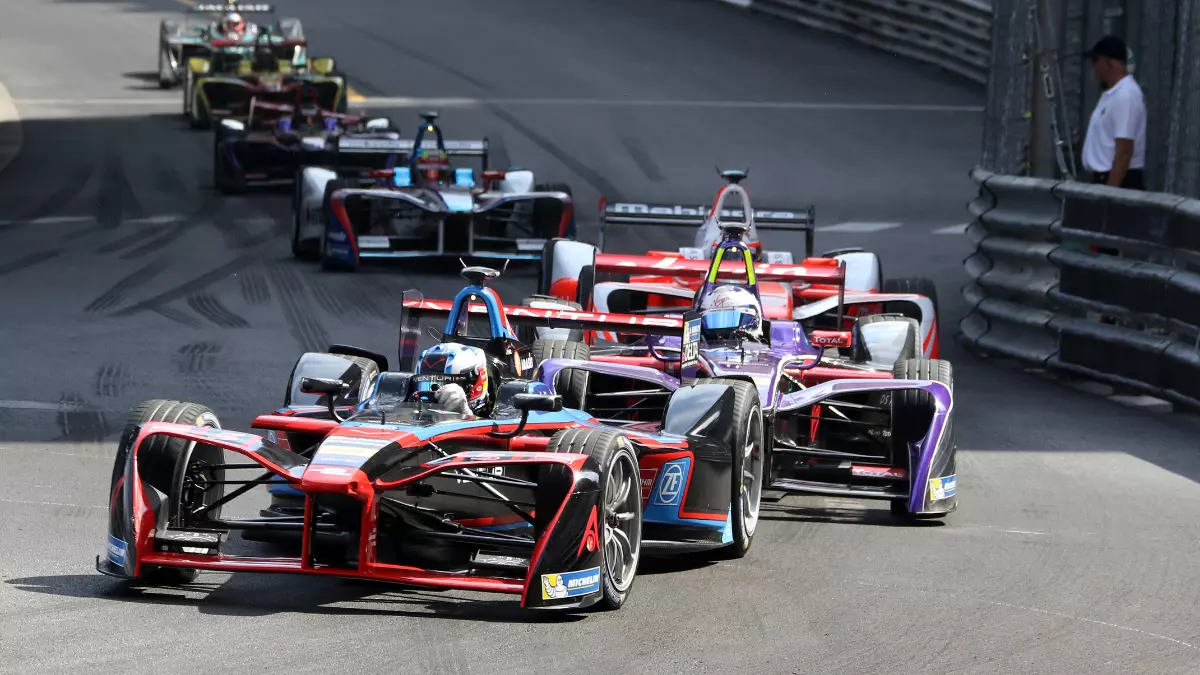
Welcome to Engineer Academy where we’re exploring an A to Z of Engineering – everything from acoustics to zoos.
In each episode, we spin the wheel to find out what type of engineering we’ll be exploring with the help of Engers, our engineering expert.
You can listen to the full series of the A to Z of Engineering here.
Let’s take a look at Motorsport Engineering.

The pinnacle of Motorsport has to be Formula 1 racing – with iconic teams and famous drivers competing in glamourous locations all over the world. Maybe just hearing the words Formula 1 gives you a sense of thrill and adventure? Some people have a knack for racing and speed excites them. But to others, the sound of engines and understanding the mechanics and the workings of the machines, gives them an adrenaline rush. For them, understanding how they work is more exciting than riding a motorcycle or driving a sports car is. Let’s drive into the engineering expertise in this exciting industry.
Formula 1 cars are pretty speedy – they can accelerate from 0 to 60mph in under 3 seconds and clock up over 220mph. And they can do this because of their carefully engineered aerodynamics as well as powerful engines. It’s also big business, with the big teams spending up to $140m per season.
Before each new season, every Formula 1 team will analyse how their cars performed in previous seasons and identify areas that might need improving like increasing speeds at which cars can corner – as well as meeting new safety standards. . Design engineers will be tasked to come up with new ways to solve particular problems – some might work on part of the car’s suspension, whilst others might redesign electronic elements. Once a new design has been drawn up – it’s time to get testing.
Computer simulations are used to see how the new designs perform under the tough conditions of the track – and then real-life simulations will take place – putting the new designs through their paces in wind tunnels. Sometimes there are conflicts to be resolved – like whilst a heavy part might help reduce lift to keep the car on the tarmac, the extra weight might result in slower speeds on the straights. Engineers and other members of each team will work together to come up with solutions that get the very best results by the start of the new season.
Ready to race? Wait for the chequered flag!
Of course, the engineering team’s work is far from over – before, during and after every race they will constantly analyse how their cars are performing and make additional changes if needed.
And we need to remember that it’s not just the cars that need careful high tech engineering solutions – everything from the tools used by the pit crew, the communications systems used to talk to the drivers and even the helmets they wear will all have gone through a careful design process. In a business where hundredths of a second can make a big difference, it’s crucial that engineers think of every detail and make every element as good as it can be. Mistakes on the track or in the design could result in injury or even death.
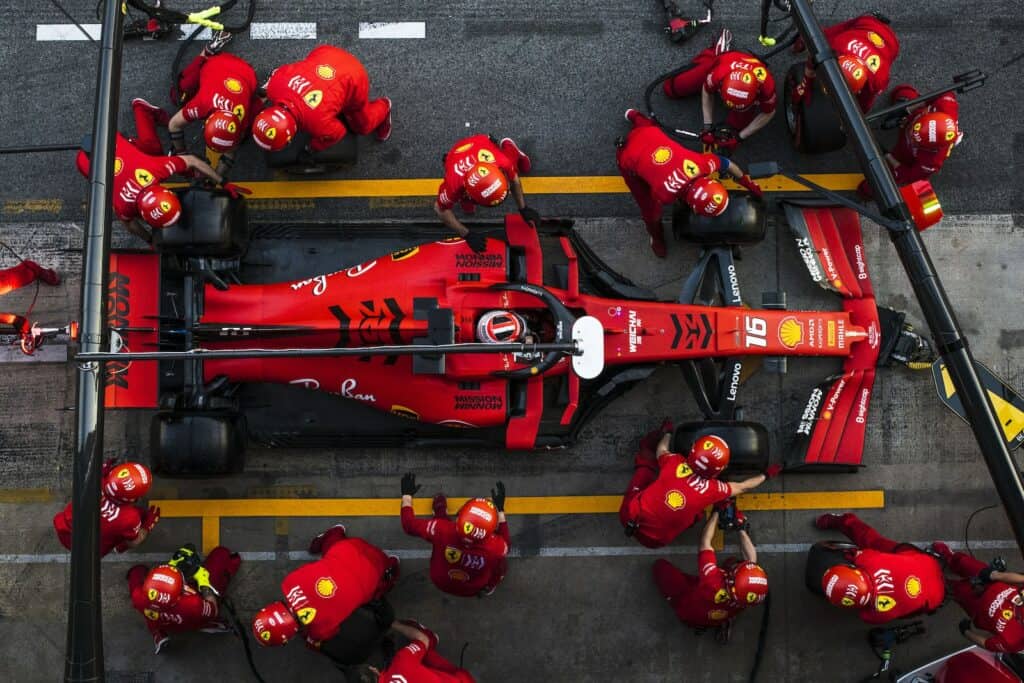
As well as the engineering team, drivers are supported by a large team – from nutritionists to mechanics who will maintain and repair the cars. The most well-known mechanics are the pit crew who can change tyres during races in just a few seconds.
Pit stops have got faster and faster over recent years – mainly because cars are no longer allowed to refuel. The fastest tyre change in 2022 was just 1.98 seconds, a record achieved by the McLaren team.
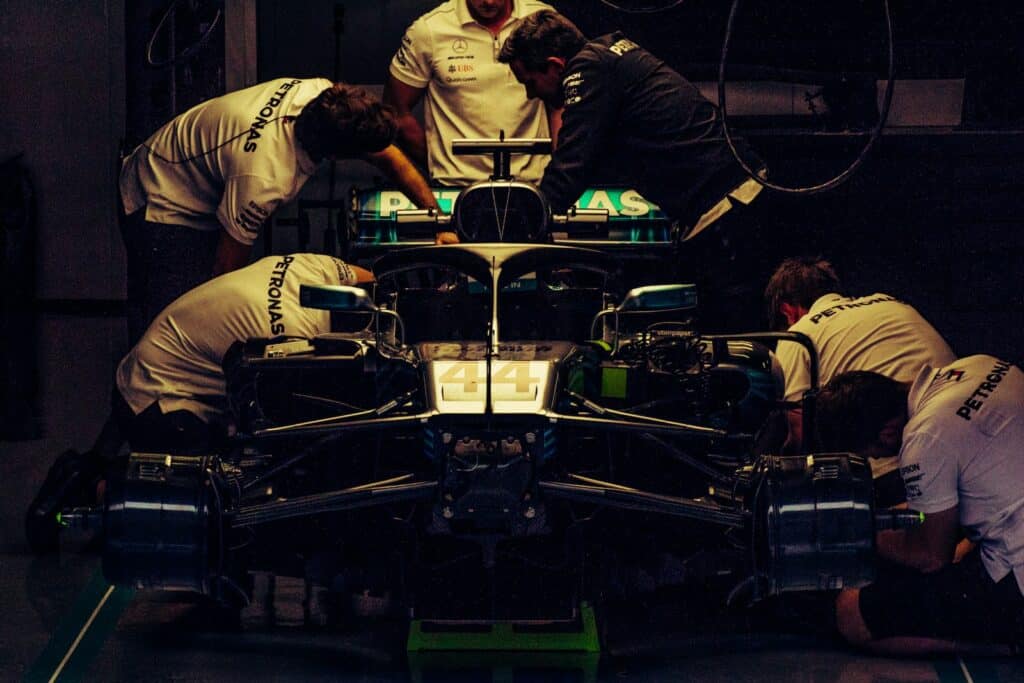
As well as the pit crew, there are many other types of mechanics behind the scenes – often specialising in a particular part of the car. So, if this sounds like your dream job – how would you go about getting involved? Well, for the very top Formula 1 teams, you would need to have a lot of experience in the industry. Starting out it’s likely you’d need an engineering degree – not necessarily in Automotive or Mechanical engineering, but perhaps in Aeronautical and Motorsport engineering. And as competition can be tough, it can help to prove you had the enthusiasm for the sport – perhaps by being involved in marshalling events.
It’s one of the highest profile engineering roles there is, and whilst many of the engineers are based away from the track, for some it can be a career that takes them all over the world!
And that’s our take on the letter M – it’s been MONUMENTAL!
If you would like to check out some other types of engineering, why not check out Mapping, Marine, Material, Metallurgical or Municipal engineering.
Join us again next time to spin the wheel and explore another letter in the A to Z of Engineering!