



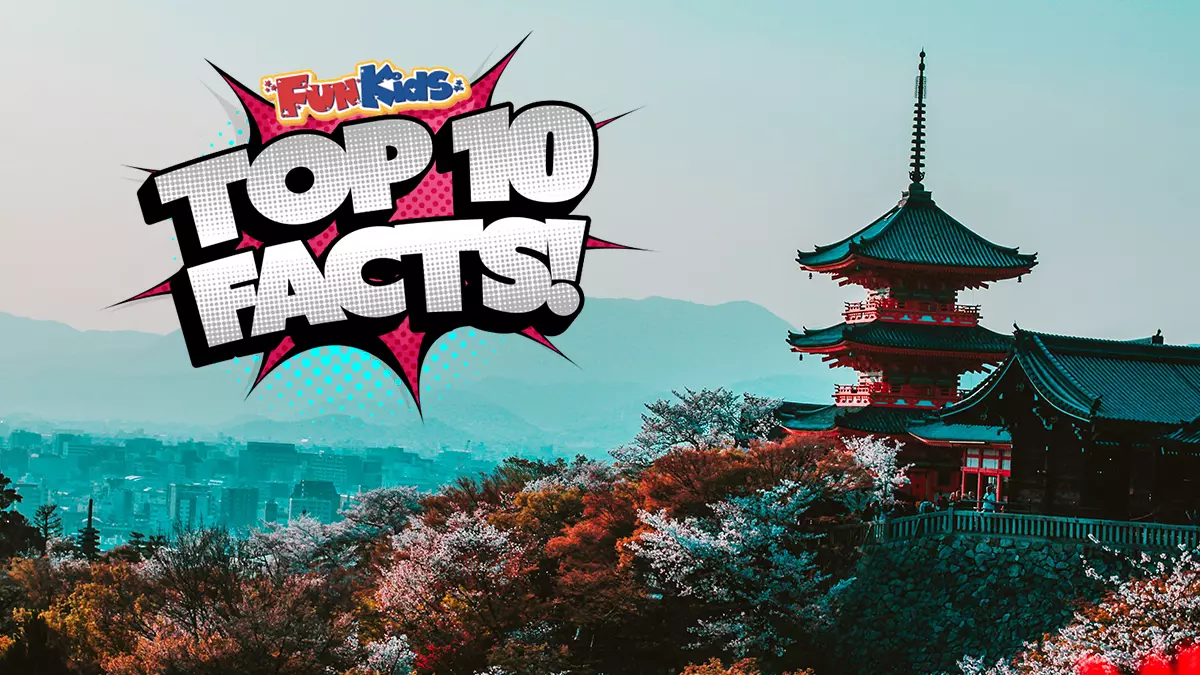
Embark on a journey to discover the fascinating wonders of Japan. From the iconic cherry blossoms that paint the spring skies with hues of pink to the invention of karaoke that revolutionised entertainment.
Delve into the speed and efficiency of Japan’s Shinkansen, where bullet trains zip through the country at astonishing speeds. Experience the charm of individual melodies at Japanese train stations and the cultural spectacle of sumo wrestling, Japan’s national sport. Learn about the sweet tradition of Kit-Kats and the fortunate exchange of over 300 flavours for encouragement… and more.
Join us on this exciting journey through the vibrant and captivating tapestry of Japan!
1. Japan is famous for its cherry blossom.
Japan is renowned for its picturesque cherry blossoms, or “sakura,” which bloom every spring.
During this time, people engage in the age-old tradition of Hanami, where they gather under the cherry blossom trees to celebrate and appreciate the fleeting beauty of the blossoms.
The practice symbolises the transient nature of life, encouraging individuals to cherish the present moment and the beauty that surrounds them.
Embed from Getty Images2. Japan is the birthplace of karaoke.
Karaoke was invented in the early 1970s in Japan.
The concept of karaoke was developed by Daisuke Inoue, a Japanese musician and businessman. Inoue created the first karaoke machine in 1971.
The word “karaoke” is a combination of two Japanese words: “kara,” meaning empty, and “oke,” short for orchestra.
The invention of karaoke revolutionised entertainment and became a popular social activity worldwide.
Embed from Getty Images3. They have super fast trains!
Japan’s Shinkansen, or bullet trains, are a testament to the country’s technological advancements and commitment to efficiency.
These high-speed trains can reach speeds of up to 200 miles per hour and are known for their punctuality.
The Shinkansen network connects major cities, offering a reliable and rapid transportation option that has become a hallmark of Japanese travel infrastructure.
Embed from Getty Images
4. Japan is on four tectonic plates.
Japan’s unique position is on four tectonic plates. This means it experiences more frequent earthquakes compared to other regions.
Japan’s location at the meeting point of these massive geological plates results in increased seismic activity. The constant shifting and grinding of these plates create tension, which is eventually released in the form of earthquakes.
Despite the heightened risk, Japan has developed robust infrastructure and advanced earthquake measures to ensure the safety of its residents.
5. Japanese train stations have their own individual tunes.
Each train station often has its own distinct melody or jingle that plays when a train is arriving or departing.
These station melodies, known as “hassha merodi” in Japanese, serve both functional and cultural purposes.
They are often inspired by local folk songs, historical events, or natural elements associated with the region. The purpose is not only to inform passengers about the train’s movements but also to create a pleasant and memorable experience.
It’s also very useful to people who are blind as they can learn which station they are at.
Embed from Getty Images6. Japan’s national sport is sumo wrestling.
Sumo wrestling stands as Japan’s national sport, rooted in a history that spans over a thousand years. The sport is characterised by strict traditions and rituals, creating a unique spectacle for spectators.
Sumo tournaments draw locals and tourists alike, offering a glimpse into Japan’s rich cultural heritage and traditional sports.
7. There are over 300 Kit-Kat flavours.
Kit-Kats are considered lucky in Japan, and their popularity is tied to a play on words.
The name “Kit-Kat” sounds similar to the Japanese expression “kitto katsu,” which translates to “you will surely win” or “victory.” Due to this similarity, Kit-Kats are often exchanged as gifts to provide encouragement and good luck, particularly during exam seasons or other important events.
They have over 300 varieties, including green tea, sake, sweet potato, and wasabi!
Embed from Getty Images8. Aoshima Island is full of cats!
Aoshima Island, known for its abundant feline population, has become a paradise for cat lovers.
Cats significantly outnumber human residents on the island, creating a unique and charming destination.
Similarly, Okunoshima has thousands of rabbits!
Embed from Getty Images Embed from Getty Images
9. Mount Fuji is the tallest mountain in Japan.
Mount Fuji, standing at 3,776.24 metres, is Japan’s tallest mountain and a symbol of the country.
Although classified as a dormant volcano, scientists continue to monitor Mount Fuji due to the low but existing risk of eruption.
The iconic peak is a UNESCO World Heritage Site, attracting visitors with its majestic beauty and cultural significance.
Embed from Getty Images10. Kawaii is a popular word, meaning cute!
“Kawaii” is a Japanese word that means “cute” or “adorable.”
In Japan, it’s not just a description of something cute; it’s also a cultural phenomenon that influences fashion, art, and even behaviour. Things that are considered kawaii are often characterised by their innocence, sweetness, and charm.
This can include cute characters, colourful designs, and anything that creates a warm and fuzzy feeling.
Many popular animated characters, like Hello Kitty, Pikachu, and various anime characters, are considered kawaii.
People of all ages in Japan appreciate and enjoy kawaii elements in their daily lives, and it has become a significant aspect of Japanese pop culture.
Embed from Getty Images Add a comment