


One of the fun things about travelling by train is watching the changing landscape!
Your journey could take you through towns or the countryside – or both – up hills and down valleys. But how did engineers build the lines across all those different types of landscape?
That’s what Bex and Dan are talking about today in our podcast series all about Britain’s railways!
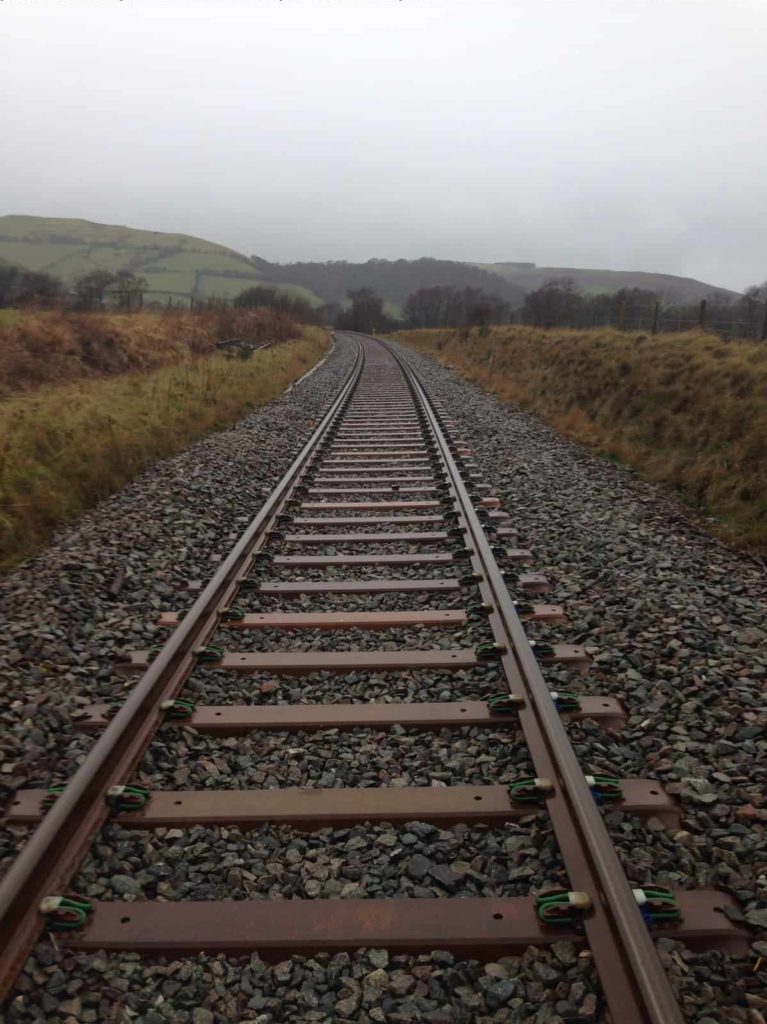
When engineers are planning a railway, right from the start they’re thinking of ways to make sure trains can run as smoothly and quickly as possible.
It’s better if the track is laid as straight as possible, because the fastest way between two places is a straight line…
That doesn’t just mean in a straight line from one place to another, but also as flat as possible.
For example, the line from London to Swindon is very flat and straight – Brunel, the engineer, knew how important straight track would be.
Even when the track is level – it might be tricky to get a straight line…

Railways have to get around natural features such as rivers and hills, and man-made things like buildings – and even entire towns!
You can’t really move a town or a river or a big hill, can you? That’s why you need tunnels!
Tunnels are expensive to build, so sometimes engineers dig a groove into the land to make it so the railway can pass at a lower level than the original ground level.
That’s called a cutting.

In many parts of the UK, the countryside is not as flat, and so to keep the track as level as possible, earth might be built up into embankments or dug into to form these cuttings.
There’s one final way trains can stay level and you might recognise it from some really iconic movies, like Harry Potter.
This is a viaduct – a long bridge that spans a valley. There are two thousand viaducts on the rail network and over thirty thousand bridges!
Find out more about Britain’s railways!
Bex and Dan from Fun Kids learn all about the future of Britain’s railways, from signals to trains and tracks, in this new podcast series!
 Apple Podcasts
MOBILE: Kids Guide to Transport: Rail and Road
Bex and Dan learn all about the future of Britain's roads and railways!